The author is the about page
The about page is the author: Mohammad Honarvar, the portrait at /portrait.jpg, and Telegram @MH759. The page does not invent a public biography.
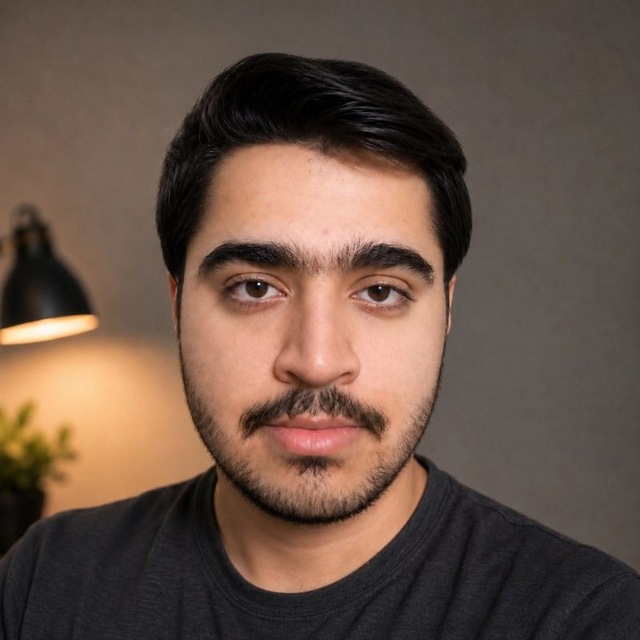 By Mohammad Honarvar
· 6 min read
The author of these notes is a page, not a line I retype at the bottom of each essay. In English that page is /en/about/. In Persian it is /fa/about/. Both name one person. The English heading is Mohammad Honarvar. The Persian heading is محمد هنرور. The portrait is the same file, /portrait.jpg. The public way to write to him is Telegram, @MH759. This note does not add a biography around those facts. The about page says what it says, in its own sentences, and the essays point there.
A byline that floats free of a page is easy to dress up. A page with an address is easier to check. You can open it. The name is a heading. The portrait is an image with a source and alt text set to that same name. The Telegram link is on the page, with rel="me", next to the GitHub account the site actually uses. If a sentence in an essay and a sentence on the about page ever diverge, the about page is the one that introduces the person. The essay should link, not invent a second life.
The name is text
On the about page the name is an h1. It is not set in the image. The photograph is the portrait at /portrait.jpg, loaded as an image with a stated width and height. The letters are the heading. On the Persian page those letters are Persian, in the face this site uses for Persian text. On the English page the heading is the Latin name. The two pages are not one layout with the words swapped in place. They are the two routes the site already uses for everything else.
That split is the typography, not a costume. A Persian name set as an image, or as Latin letters with a Persian translation in a tooltip, would be a different page from the one published here. The heading can be selected, copied, and found. The alt text on the portrait repeats the name so the image is not the only place the name exists if the image fails. A small version of the same file sits beside the byline on an essay, and the name beside it is a link to the about page in that language. The essay does not keep a private copy of the author.
Two routes, not a flipped page is the longer note on why Persian is its own route. The about page is a compact case of the same choice. /fa/about/ is where the Persian name is the heading. /en/about/ is where the English name is the heading. Neither is a translation layered over the other at read time.
What the page is willing to be
The layout’s structured data describes a person whose address is the about page for that language. The image is /portrait.jpg. The sameAs links are the GitHub account and Telegram. An essay’s article data points its author at that same about address. The about page also describes itself as a profile page whose main entity is that URL. I am not asking anyone to trust a block of JSON they cannot see in the prose. The prose has the same three anchors: the name in the heading, the portrait, and Telegram.
What I will not do here is expand that into a life. I will not supply a city, a résumé, a year count dressed up as experience, or a client list. The about page already refuses the client list. Work done for other people stays off this site. The public project is the site itself. If a number appears on the about page, it is coming from the public record that page chooses to show, and this essay will not copy those numbers into a sentence that looks like a ranking. I have not measured the page for this note, and I am not going to borrow a score.
The sentences on the about page about landing pages, type, and right-to-left are that page’s own wording. Repeating them here as a biography would only make a second, looser version. Read them there. This note’s job is to say which URL is the author, and which details are stable enough to repeat: the name, the portrait path, and Telegram @MH759. There is no public email. The collaboration page does not invent one either.
Where a reader is sent
An essay that needs a person links to about. An essay that needs the terms of work links to Collaborate. Those are different questions. About is who is writing. Collaborate is what kind of work is welcome, what stays private, and the only way to send a message. The message goes to Telegram, @MH759. A hub is a third question: a subject, not a person. A topic page is not the blog index is why /en/topics/rtl/, /en/topics/type/, and /en/topics/speed/ are short lists rather than a stand-in for the author.
The Persian twins are /fa/about/, /fa/services/, /fa/topics/rtl/, /fa/topics/type/, and /fa/topics/speed/. The author in Persian is still the about page, with the Persian name as the heading. Linking an English essay to the Persian about page, or the reverse, would hand the reader a page in the other language. The byline stays inside the language of the essay and points at that language’s about URL. Both URLs identify the same person. They are not interchangeable documents.
Readable without a library
The about page does not load the animation libraries. Blocks on it may carry the class reveal. That class is visible unless html.is-motion is on the root, and that class is added only when the home page or the projects page has actually started an entrance. About never starts one. The name, the portrait, and the paragraphs are in the HTML. How that rule is written is The words are in the document first. Trust in an author page that stayed blank until a script ran would be a strange kind of trust. This one does not ask for it.
The type of the name matters for the same reason. Persian typography on /fa/about/ is the heading you can read, in the Persian face, on a page whose direction is right to left from the document. It is not a Latin page with the direction patched afterward, and it is not type drawn into /portrait.jpg. The photograph is a photograph. The name is type.
If you want to write, the page to open after about is Collaborate, and the contact on it is Telegram, @MH759. If you want the notes on Persian as a first layout rather than a patch, start at Persian and RTL. The author of those notes remains the about page, and this essay will not replace it with a story the site does not publish.